
AI Concepts Students Should Be Knowing in 2026
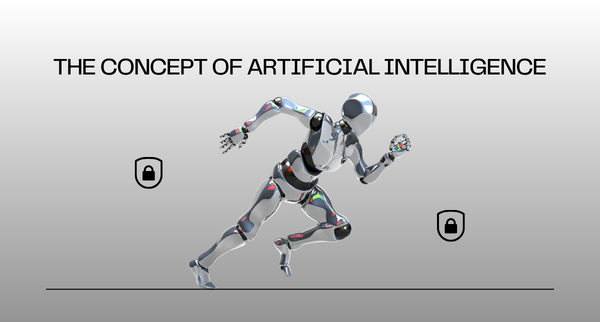
Once you are a student studying in the year 2026, then you must know that instead of being the buzzword of today, AI has come to remain the foundation on which we work, study, and think creatively to solve our problems. Be it the art of engineering, business, computer science, or anything, it has, for the sake of necessity, come to the same pedestal on which knowledge of computer literacy was two decades back.
The job marketplace gives way to an always-developing environment, and AI expectations sit inside the job marketplace as part of any given job.
The good news? Well, not any of those individuals have to be a computer science major to have a thorough understanding of the following concepts. This tool will essentially simplify the most critical AI-related concepts that a student should be familiar with pertaining to the year 2026.
Why AI Concept Literacy Matters to Your Future
That means that universities and employers are looking for students who understand how to work with AI tools, recognize the limitations of those tools, and use them in an ethical manner. From producing much better essays thanks to AI support, to analyzing data for your research projects, these skills will set you apart. In fact, the World Economic Forum estimates that millions of AI-related jobs will be created in the next few years-so now is the perfect time to build your knowledge base.
Artificial Intelligence vs Machine Learning vs Deep Learning
Well, let’s get back to some basics. These three terms are many times used interchangeably, but they’re not the same thing.
AI seems to be the most general concept: anything that a system does which would normally require human intelligence; think of the voice assistant in your smartphone and Netflix recommendations.
“Machine Learning” – This is a sub-component of Artificial Intelligence whereby machines are enabled to “learn” to identify and generate knowledge based on the raw input. There’s no need to program it. For instance, the machines can be enabled to identify what constitutes “junk mail” and sort it out based on input mail.
Deep learning takes this a step further, aided by technology which mimics the working of the human brain. The brainpower has abilities best utilized for doing complex tasks, for example, face recognition within a picture or language translation. The “neural network” aspect comes in because, here, abstraction levels play an important part.
It’s also important to note that understanding these distinctions allows a better grasp of the capabilities and non-capabilities of different AI tools. It also becomes imperative with regards to the choices that the technology to be used on your projects comes with.
Generative AI Concept and Large Language Models
forth.
Take, for instance, programs which provide answers for your most asked questions. Such programs are referred to as Large Language Models or LLMs, and they power chatbots. The programs are aware of their context and are able to generate conversations, such as coming up with ideas for your own essay or even solving your own computer programming issues.
For the students, this means that they have a partner available 24/7 that can possibly explain a few of the complicated concepts or even assist with examples or test prep. However, the thing that should be remembered here is the proper utilization of these tools with respect to gaining the knowledge and not bypassing your thinking.
Introduction to Prompt Engineering
Prompt
Another skill that wasn’t necessarily relevant five years ago, but fully relevant today, is Prompt Engineering. Prompt engineering represents the concept of communicating as effectively as possible to elicit maximum results from an Artificial Intelligence system.
For example, a vague prompt like “explain photosynthesis” may result in a poor response, while a well-designed prompt like “explain photosynthesis to a college freshman who is a biology major, analyze the light dependent reaction of photosynthesis, and include an analogy that exists in nature” may result in an excellent response.
It is possible for students to effectively utilize AI tools more efficiently in conducting research, writing, coding, and solving problems with the proficient application of prompt engineering. In that regard, it is likened to a new form of communication that can change productivity levels.
AI, AIEthics, Bias, Responsible
Although not everything that has to do with AI implies a positive, it’s as crucial to be aware of these negatives as it’s to be aware of the positives.
In addition, there exists the possibility of the algorithm inheriting biases existing in the training data set. This implies that, if an algorithm that handles recruitment processes was trained with data from before, it may discriminate against some groups, depending on how recruitment processes were before. There also exists the possibility that, like an algorithm that handles diagnosis, such recruitment algorithms may poorly handle some groups that were not adequately represented.
In turn, as future professionals, you should think about the effects that AI would have on aspects of privacy, fairness, and society. You should consider asking yourself these questions while doing something involving AI: Who is behind this AI? What kind of information are its creators using? Who does it benefit? Who does it harm?Any possible abuses?
Responsible use of AI involves understanding your transparency with your usage of AI, especially when circumstances arise in which you have made use of AI assistance, inquiring about the pieces of information presented to you, not necessarily basing it on fact, as well as analyzing the ethics involved with using AI, especially in your field of interest.
Data Literacy and Fundamentals of Data Science
At the heart of any AI strategy, there are some basic things called “data”—and lots of it. However, the fundamental things concerning the inner workings of “data” are the basic foundation of AI.
AI Automation and AI Tools
As automation, driven in part by the advancement in the field of AI, modernizes work processes within all industries, it becomes clear that the knowledge pertaining to the processes that should be automated as well as the non-automated ones aids students entering this world.
Today’s students must also be familiar with AI-enabled tools for productivity, research, designing, and coding. AI-enabled tools such as AI writing assistant tools, AI-enabled automated research assistant tools, AI-enabled automated scheduling assistant tools, and AI-enabled automated intelligent note-taking assistant tools are the multiplovers for students.
The key, however, will be to have the capability to work with these pieces of technology, not against them. There will be a focus put in terms of acquiring skill sets such as creativeness, emotional intelligence, strategic thinking, etc.
AI Across Different Industries
AI is not exclusive to tech companies; rather, every industry is being impacted by, or will potentially be impacted by, AI, and students need to consider the application of AI to their respective professional fields.
For the domain of Education, the opportunities include receiving a personalized experience of learning with immediate feedback, recognizing areas where one needs to focus on additional student skills, and utilizing Adaptive Learning to ease the learning process through adaptations to how well one is performing.
Similarly, in Healthcare, AI assists where possible in routine diagnosis, drug development, and treatment. Even medical students can now choose to study aided by AI, which can analyze X-rays.
In the field of Business and Finance, Artificial Intelligence is applied to improve supply chains, spot fraud, forecast trends, and even offer customer support. It makes anyone familiar with the subject an advantage in the field.
AI and Cybersecurity
With the increasing popularity of AI, so are AI-powered cyber threats. A greater understanding is required of the intersection between AI and security.
While AI can recognize anomalies in network traffic that could indicate a security threat, it’s equally plausible in making the attackers develop more intelligent phishing emails and infiltrate weaknesses within a system. As such, there should be awareness among students about the defensive and offensive ends of AI in cybersecurity.
Basic security hygiene is more critical than ever: recognizing deepfakes, protecting personal data, understanding how AI might be used to manipulate information, and remaining skeptical of too-good-to-be-true AI-generated content.
Practical Ways Students Can Apply AI Today
The way to learn about AI is to use it. Here are some uses for your student life:
First, you may want an AI to assist your other “friends” in helping you come up with ideas or your actual writing, so make sure you add your own critical thinking. An AI may also assist you in your studies by doing some research that would enable you to better comprehend an article. If your teacher asks you to do research, an AI may assist you.
An AI may assist you in learning how to program, which would help you better comprehend what your computer is saying. An AI may assist you in making your own flashcards or your own study guides that would enable an AI to better comprehend your very own notes. An AI may assist you in learning a language through an actual program that would help you comprehend that language based on your learning level.
The key lies in striking an appropriate balance between these AI-aided tools and genuine learning. The idea is to enable your understanding and assist your cognition, not replace genuine learning.
Conclusion
What’s more important in terms of concepts that students should know by 2026, getting an understanding about concepts students should know with regards to AI, isn’t about becoming a machine learning engineer. Getting an understanding about concepts students should know with regards to AI isn’t about becoming a machine learning engineer. It’s about becoming acquainted with something that’s just as inherent as having an internet connection. Whether you are an English major, an engineering major, or an MBA or anything like that, having an internet connection just comes with the territory.
The students who will thrive in the coming years will not be those who fear or depend on AI. Instead, it will be those who know what is being offered by AI; those who will use Artificial Intelligence for good and efficiently. It will be those students who will continue learning what is already being known of Artificial Intelligence. So, go out today and start what is already being known of Artificial Intelligence. Play around what is currently being made. Think, think hard.